Friday, December 27, 2013

Starting Anew

Howdy, I have been away for a while, Permaculture fans. It's actually been several years since I've written here, but it is nice to know that folks have used the information found herein (over 30k hits in the last 2 years) - hopefully to implement the concepts in their own gardens!

Sleeping Winter Garden


To all you gardeners who are feeling blue because nothing is growing, I have some good news! Good gardens come from good planning and now is the time to start planning.
  1. Use the following link to determine your Agricultural Zone.
  2. Decide how big you want your garden to be, here are some guidelines: 100sqft/person for light yield all season, 300sqft/person medium yield, 1000sqft/family-of-four for steady medium yield with careful planning and vertical elements. 
  3. Choose your veggies and their companions! Here is a handy table for companions: Click Here
  4. Plan for vertical elements! Want to grow snap peas? beans? cucumbers? Grow them up! See my previous blog post on vertical elements
  5. Plan for succession - make a schedule! Dig out your dusty Google Calendar and write it all down - the more time you put into your scheduling now, the better your yield will be, I guarantee it! 
    1. Succession planting is the idea that you plant rows of seeds 2 weeks apart, adding to your garden slowly. Continuous Planting = Continuous Yield (keep this in mind!). 
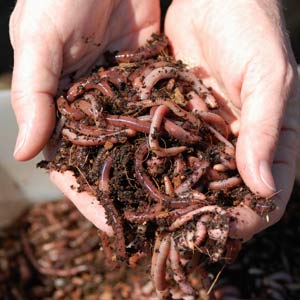
  6. Begin nurturing your gardens as soon as the frost breaks - good organic matter, compost & mycorrhizae are really important! My advice is to build a worm bin - the castings of worms are the best and least expensive way to create top-quality soil and bring beneficial worms to your garden. Check out this video where I talk about a worm-bin that I built with a small apartment community in Portland, OR:
  7. Plan for some flowers! Flowers are known to attract bees and bees will pollinate your garden!

Enjoy the creativity! Feel free to post your photos and comments below.

Monday, June 25, 2012

LadyBugs, Warriors: General Aphideous...! Chapter 1

An epic story

A long time ago in Flora, a country that humans have long forgotten, Karmichael woke up early and wandered out to the back stoop to the little garden he tended. He picked some peas and strawberries, eating them as he went. He moved quietly with his watering can in the early dawn - for this is when gardens like to drink cool fresh water. Silently moving from patch to patch feeding each plant, projecting his excitement and love for his garden. Each plant greeted him with supple edible fruits; the garden nourishing and being nourished in return. A perfect system as far as the two of them were concerned...

Then he saw it out of the corner of his eye, Sweet Moss! There was a large healthy cluster growing on a small log, this is what Karmichael had been waiting for all spring! In the low light it looked greenish with brown spotted tops *perfect* - a delicious mossy vegetable that Karmichael recognized. But he was mistaken. This particular moss not green at all, but had a subtle blue tint - a variety of moss that humans no longer remembered. This was Fae Moss and can only be found in the moments between night and day. Only for a brief instant is it visible to the human eye and on this particular morning Karmichael was in the right place at the right time. Eagerly and without a moment's thought, Karmichael grabbed a bunch, and tossed it in his mouth. Delicious! Actually fae mosses taste a bit like sweet cream with toasted almonds. 'Wow', he thought! I could eat that all day, I had better leave some to grow...

As he went to go check out the emerging flowers in his bee garden, he glanced at the Lupines growing near the edge of his veggies. Much to his dismay there were aphids everywhere!

The aphids in the country of Flora were no ordinary aphids. More like insect-sized dragons with voracious appetites. What is worse is they breathed an acidic steam that withers everything in sight. These aphids are not to be trifle with to say the least.

Karmichael watched as they munched away like a swarm of hungry locusts... Just as he sat to think a small ladybug landed on his arm. The small beetle was red with black spots on each of it's chitinous wing-shells. Karmichael watched intently to see what the ladybug would do, but he never could have guessed what was going to happen next.

The ladybug turned around in circles, stopping every so often as if to look out and see if they were alone in the early morning. Suddenly it stopped turning and took flight. Normally ladybugs fly in a single direction and do not simply hover in place, but there she was hovering right over Karmichael's arm. He thought it odd, but obviously not impossible. But then as began to turn his head away and try to figure out what to do, the ladybug started to... change!

The small beetle's skinny black legs drew into her center and out sprung arms, legs, feet, hands and out popped a tiny head too! Karmichael rubbed his eyes, blinking to clear his vision, but as he opened his eyes again there she was, a small warrior in a spotted uniform brandishing her razor sharp split shell skillfully.

She landed once again on his arm and quickly and deftly climbed to Karmichael's shoulder. Half in a daze, half still not believing what he was seeing and half frightened of what this tiny warrior might do, Karmichael flinched.

A tiny voice, barely perceptible shouted 'RELAX WILL YOU?!??!'

'What!?' Karmichael said.

'I said, RELAX! I'm not going to hurt you there big guy...' the tiny voice replied.

'Oh, that's, um... that's good' - Karmichael said, relieved...

'Where are they, giant!?'

'My name is Karmichael...' - Did I really just introduce myself to a ladybug? Kar, you're going nuts, he thought to himself.

'I am Pollenis, warrior princess of Lilytopia - but I have no time for pleasantries. WHERE ARE THEY!?'

'Who?' Karmichael asked.

'You know well who... The dragonaphs and their commander, General Aphideous' Pollenis replied.

Karmichael, examining the situation more closely, began to feel dizzy, 'this can't be real' he thought. He closed his eyes and leaned against the stoop, 'Just a moment to rest' he said aloud to no one in particular still refusing to believe what he had just seen... 'I mean, a talking bug? An aphid army? Maybe I need to get more sleep...', he thought...everything grew dark and sleep took him.

It wasn't long after falling asleep however, that Karmichael woke up in a strange world to a large bucket of frigid water being dumped over his face. 'Ahh! I'm up, I'm up - what, uh, where am I?' Rubbing his eyes, looking up at the ladybug warrior 'Pollenis?'

She set the now empty bucket made from a leaf beside her standing over him, looking down at him impatiently. 'Don't go passing out on me again, we have to find the dragonaph army as quickly as we can! Let's go!'

'I'm not going anywhere until you tell me where I am!'

'You're in your garden', she said, 'Oh Gaia, humans are soo oblivious...'

My garden...Gaia... huh? Karmichael thought. He looked up and saw a massive tree with humongous leaves sticking right out of the trunk. As he stood up, he saw he was on top of a large rock and that he and Pollenis were not alone. In fact they were camped on a large terrace and there were tents made of leaves, blades of grass and something that looked like bamboo being set up all around them. He wandered over to the edge of the cliff and peaked over. He realized immediately that they were actually on a small terrace high above a much larger terrace that spanned what seemed to be many miles. He could see the whole war-camp from his vantage point. There were thousands of ladybug warriors crowded around fires, sharpening their wings and tending to their mounts, mighty caterpillars that could carry nearly twenty warriors at a time.

Bewildered Karmichael looked up and found Pollenis staring at him with her arms crossed and an ill-favored look on her face. He jumped up, 'Sorry, I just... I can't believe this is happening.'

'It's fine, it's not like Aphideous and his dragonaphs are destroying Gardenia as we know it, not like they could become powerful enough to control the length of the Nektar River, not like they wouldn't turn us all into slaves if we don't do something now - OH WAIT, that's exactly what's happening! Now, are you going to help me stop them or not?!' Pollenis glared at him with the kind of stare that could level an ant hill.

'I uh, yea I guess'

'Good, come with me'. She led him through a maze of tents, around fires and sleeping caterpillars up a narrow path to a very large tent guarded by two of the largest warriors he had seen up to this point, twice his size indeed! They stepped aside allowing the pair to enter. The scene before him was magnificently fierce and comical all at the same time. A giant table with muscular warriors draped in fine cloth with symbols Karmichael did not recognize etched into their chitinous wing-shells. One of them, sitting at the head of the table stood up and gestured to them. 'Come sit.'

They took seats and though Karmichael was fully expecting to be the least important one at the gathering, all their eyes seemed to be fixated on him... Just as he was about to say something, the largest of the ladybugs and said in a very lady-like voice, 'Human, we need your help... This is YOUR garden, you designed it and with your help we can take the dragonaphs and commander Aphideous by surprise and crush him despite that they outnumber us 10,000 to 1.'

'I'm, sorry... did you say 10,000? 10,000 to 1? This sounds like suicide.' They all stared at him blankly... 'um, Pesticide?' Eyes widened and fearful glances were exchanged around the room.

'That is exactly what we are trying to prevent!' One of them shouted, 'But we need your help.' 'Yes, we are shamed to call upon humans, indeed we haven't provoked interaction with your species for hundreds of years... but necessity dictates desperate measures in this dangerous time and so here you are, what do you call yourself again? Karsicle?'
'My name is Karmichael!'

'Ah, yes Karmichael... Do you know the city of Lupine-Heights?' He nodded, realizing they were referring to his lupine flowers. 'Well General Aphideous and his army of dragonaphs are stationed there consuming Nektar so quickly, Lake Nektaria has lost a third of it's size in only 2 days. At this rate they will have control of all the Nektar in Gardenia in less than a week and then all hope will be lost. As you can clearly see, we have no choice but to go to war!'

'I see,' Karmichael said. 'And what do you want me to do?'

[End Chapter 1] ... More to come :-)

Tuesday, May 15, 2012

Vertical Elements: For Beauty and Function

I practice permaculture on a very small plot of land. One area that is 6' x 10' and one area that is 6' x 20'. How do I grow soo much food then? The answer is in the air!

No, I'm not suggesting that the air in my garden is any different than the air in yours, actually what I mean is that I garden UP!

Adding vertical elements to your garden can be fun, beautiful and remarkably productive. Consider the summer squash; zucchini, yellow squash, sunburst, etc. Summer squashes grow on vines that like to sprawl out and tend to take over. Instead of allowing my squashes to grow all over my other plants, I train them up trellises I built exactly for this purpose! Now I have a beautiful vertical element in my garden that allows me to grow squashes all summer long and only uses about 8"-12" of actual on-the-ground garden space!

Here are a few examples of trellising:
Above is a lovely example of how an urban farmer built a ladder-trellis for his zuchini plants! (picture taken in SE Portland) You can also see some other vertical ideas in the background using a frame and net technique.

Also in SE Portland here is a large garden with many teepee style vertical elements!


The basic hint here is BE CREATIVE. Grow up (literally) and save yourself space and have a more productive garden that gives you luscious veggies and a peaceful sanctuary. You might even play with using vertical elements as borders in your space, shielding your garden from the road, neighbors.

I wanted to share something from my own life as well. I was at the nursery the other day and told the cashier that I had gotten done with work early and that was why I was there at 2pm.

He replied, "well now you're making a whole bunch of more work for yourself with all these plants!"

I smiled back and told him, "this is not work, it's therapy."

Thanks all, as always feel free to ask questions!

Friday, April 13, 2012

Been too long

Ok, I accept full responsibility for totally slacking off here. What can I say though? I'm a graduate student and what little time I do have free, is usually spent doing something other than working, like playing in my garden. To that effect, I wanted to share a little wisdom around the concept of rain gardens!

My building just got new gutters and according to the new set of rules laid out by the City of Portland, OR, I now have a downspout that spouts right into my garden bed.

SOLUTION: Raid Garden!


Here's what you'll need

Shovel, medium sized (a little bigger than a fist) river rocks, pumice, sand and some smooth decorative rocks if you feel so inclined.


First, it's good to know about how much rainfall you get, how much roof-surface area feeds to your downspout, etc... but I just figured I'll build it and see how it goes.

I dug a 2ft deep, 2ft wide roundish hole and dumped the medium sized river rocks into the bottom and reserved enough of them to line the rim for the aesthetic effect. Next (somewhat counter intuitively) I poured in enough sand to cover the rocks, then added the crushed pumice stone on top. Lastly I collected some smooth, dark stones from the river (ssshhh! don't tell anyone - yea right this is a public blog...) and placed them neatly on top.

I also selected two different types of water-loving native grasses and planted them around the ring of rocks I made from my left-over medium sized river rocks.

Looking down at my work, I was please with the way it looked, but had no idea whether what I had made would be sufficient in size to absorb and contain water from a typical rainfall in Portland. Luckily, it would soon be put to the test.

Success, we had a pretty hard down-pour for about 2.5 hours two days later and when it calmed down a bit, I went out to inspect my creation. VOILA! No puddles in my garden bed, the reservoir was about 75% and draining at a reasonable rate (even after all that rain) and as an added bonus there were two little birds perched on the rocks I used to rim the hole drinking from the accumulated rain water. Of course they scattered as soon as I went outside, but I was proud to have created a mini ecosystem for the thirsty wildlife around my apartment complex.

Feel free to comment or ask questions about projects of your own!

Tuesday, January 17, 2012

While you're garden's in bed...

This is our time to rest, reflect, create, plan and be smart about preparing for the upcoming growing season. 

A few ideas include:

Buying seeds during the off season for great deals! 


Many online stores and local nursuries sell seeds in the off season at discounts! Good seeds to buy and start indoors early are Broccoli, Kale, Snap Peas, Lettuces, and Nasturtiums.

Indoor germination systems

Start early and be harvesting by late March/early April. This is another video project I will be taking on in the near future. Check back soon!

Save seeds from your favorite veggies 

Try peppers, squashes, peas, beans, etc. - Seed saving is actually a fairly simple process for these types of veggies, lay the seeds out on a baking tray in a warm dry area, allow them to dry completely (usually 2-3 days) and then store them in breathable dry containers and keep them in a cool, dark, and dry place until you're ready to plant. Remember you will need to overcome the odds when saving your own seeds, start with 3-4 seeds per hole when germinating for better success when bringing up seedlings.

DIY cold-frames

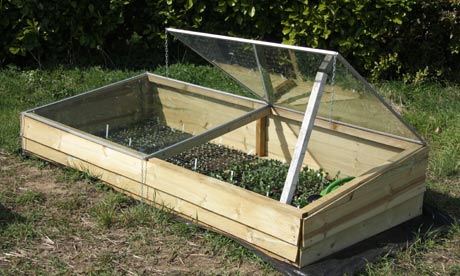
I'm going to put a video together soon (possibly this weekend - need dry weather) on building a simple and inexpensive cold-frame so you can grow all year long! Check back soon!

Saturday, November 26, 2011

Putting Your Garden to Bed the Permaculture Way

Yep, it's that time again

Allowing your garden to sleep is particularly important in the cycles of growing things. One of the central tenants of Permaculture is to waste nothing and I have a wonderful tip for you this fall/winter - one word: LEAVES!

Leaves are a blessing from nature in the deciduous areas of the Earth, but we have forgotten their worth. Leaves are a natural insulator and fertilizer for the soil they fall on and we can utilize this gift in our veggie gardens as well! So this year instead of carting off your leaves, pile them on your garden beds.

As the leaves break down over the long winter months they add precious nutrients to your top soil effectively replenishing the energy and vital minerals such as carbon and nitrogen that your garden consumed during the spring summer and fall. We hear consistently that top soil quantity and quality around the world diminishes each year, this year I challenge you to help reverse this process and use the gifts that fall at your feet to nourish your home garden.


In addition to adding nutrients leaves help to keep your soil at a higher average temperature which may allow you to start your gardens earlier in the spring than you would have otherwise. Another tip is to layer your garden beds with leaves, then un-inked/soy-inked cardboard and then biodegradable landscaping cover (black fabric-esque material). This will attract worms and help to break down the leaves and cardboard for the spring!

Love your gardens and give them something to snack on all winter long!

My Permaculture Wordle

In this time of thanks and gratitude, I wanted to give some love to Mama Earth! This is my first wordle!

Sunday, November 13, 2011

Permaculture: Plant Propogation

From one, come many

Nature has had billions of years to perfect it's strategy for survival. Plants especially are capable of fascinating reproduction. For example by clipping the leaf from a Snake plant, such as the one pictured below, cutting it into three pieces and planting it in soil, a new plant will emerge in 12 weeks.

Spider plants and Mt Hood variety strawberries have a different strategy. They send out shoots of baby plants that have the ability to either cling to the mother plant and function as a part of the whole or they can be rooted themselves as entirely new plants! I have spider plant babies and would be happy to share a few with anyone who is interested.

Propagating plants is a wonderful way to give presents and promote sustainability.  Check out this article on how houseplants actually keep you healthier! House Plants Keep You Healthy!

Permaculture Design Tools

From Pattern to Detail

We design from pattern to detail. In other words make general plans, sketch and re-sketch, find the optimal balance of space for your needs and fill in the nitty-gritty details later. If you know where your herb spiral will be, then move on, no need to know where each herb will go right away. We can learn much from nature, seek out patterns in the natural world and imitate them in your design process.

Value the Marginal - Edges!

Throughout the universe, marginal areas are often the most productive places by any means of measure. Think of a shoreline or where a forest meets and open plain. In these regions there is a disproportionate amount of productivity that supports both human and animal needs. As we design in permaculture the marginal value is a by-product of juxtaposition in your plant/system placements. For example, a pond in your garden should have as much edge as possible so that it can interact more with the systems around it.

Permaculture Zoning

  • Zone 0 - Although this zone is not outside, nor is it a garden, it is essential to the overall design. Zone 0 is your home, the heart of your living space. The key permaculture principles that we can put to use here are in energy and water conservation. Indoor plants are also part of your permaculture system and help to clean the air inside your home. Snake and Spider plants especially are amazing for this reason - and you can propagate them easily!! (I will talk about plant propagation in my next posting)
  • Zone 1 - Physically the zones are in order distance-wise from your kitchen door. This zone is the closest to your kitchen and should include the plants you use most and the plants that need the most attention/care. An herb spiral, soft seasonal fruits and berries, and salad greens are good examples of things you might like to have closer to your door.
  • Zone 2 - is designated for perennials that require less attention, but still may need occasional weeding or other maintenance. Also plants/trees/bushes that need occasional pruning might go here such as currents! Note of interest: most bee keepers tend to put their hives in Zone 2!
  • Zone 3 - your 'bread and butter'. Zone 3 is very important because this is where your main crops will grow. Main crops are those that sustain you throughout the year. Hardy greens such as Kale, squashes, beans, corn, etc may all go here.
  • Zone 4 - Further away than zone 3 and requires no maintenance whatsoever. This is a semi-wild area where you might grow raspberries, st. john's wort, edible ground covers such as trailing thyme, feverfew, etc.
  • Zone 5 - is completely untouched. We allow nature the space to breath and live. This does provide utility however. Remember observe and interact? Well this is the observable portion of your zoning. We get our inspiration from natural systems. Honor zone 5 and do not disturb it's cultivation.

Thursday, November 3, 2011

Permaculture Guilds and the Legend of the Three Sisters

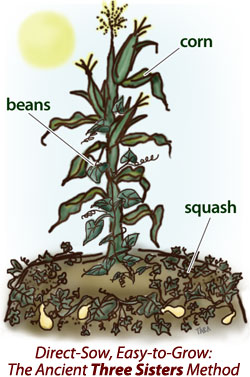
A central idea in permaculture is capitalizing on mutually beneficial combinations of plants, we call these combinations 'guilds'. Examples of guilds include: Carrots-Tomatoes-Basil, Radish-Cucumber-Strawberry, and the classic Three Sisters Guild (Corn-Beans-Squash). These guilds not only help eachother grow by providing structure and/or nutrients for eachother, but they also protect eachother from pests and help to keep more moisture in the soil during hot weather and drought.

The Iroquois Nation that thrived on the east coast of pre-colonial America believed that corn, beans and squash were precious gifts from the Great Spirit. Their planting season was marked by ceremonies to honor the sister spirits and thank the Earth for providing them with fertile soil in which to cultivate this ancient gift. By retelling the stories and performing annual rituals, Native Americans passed down the knowledge of how to grow and honor the Three Sisters from generation to generation. Now it is up to us to continue using these gifts.

What's the Big Deal?

Corn provides natural structure for bean vines to climb, and in turn the bean vines help to strengthen the corn stalk in the case of high winds or a storm. The Beans fix nitrogen into the soil by absorbing it from the air (Nitrogen makes up about 3/4 of atmospheric content) and releasing it from the root system. The Squash and Corn both LOVE Nitrogen-rich soil and will produce more edible harvest when it is readily available. The squash also plays a critical role. The roots of the squash plant are shallow but spread wide, they deter weeds from growing with their large leaves and roots that absorb much of the surface nutrients and most squash vines have thorny protrusions which deter animals from approaching the corn and beans. The Squash also provides ground cover that helps to keep moisture in the soil by shading the top layer and absorbing most of the sunlight. When grown together the three sisters produce nearly 50% more than when grown separately.

In addition to the benefits in your garden and for the plants themselves. The nutritional benefits of the three sisters is a tri-fecta of healthy goodness! The corn provides carbohydrates, the beans are rich in protein and the squash is high in vitamins and minerals, and the squash seeds can be pressed for oil as well!

Planting Instructions

Plant corn 2ft apart, when they reach a height of 1ft plant beans from seed, or when the corn reaches plant bean starts directly at the foot of the plant, 2 bean plants for each corn plant (using a variety of beans will further deter pests). Plant the squash starts between corn plants when the corn is 1.5ft tall (this is to ensure that the corn still gets enough sunlight because the squash leaves grow very fast and the leaves tend to get large quickly and have the potential to smother smaller corn plants.

Try this in your garden and experience the wisdom of the Iroquois in your garden! Grow your own!

Saturday, October 29, 2011

Permaculture 101: All about Worms!

Vermiculture Explored and Explained

Vermiculture is the practice of keeping worms for the purposes of super-speed composting and generating what is known as worm-castings, an INCREDIBLE fertilizer for your garden or pots. Worm castings are full of micro-organisms and bacterium that are helpful and healthy for your soil - and when you make your own, it's the cheapest fertilizer you can get. Another helpful by-product is the compost tea that you can drain from your worm bin and use as additional fertilizer for your garden (not as strong or balanced as compost tea you might find in a garden store or online, but it still works!).

Keeping worms? Don't they just live in the soil? Well, yes, but worms actually travel quite a ways under ground and if they're not finding delicious food for themselves in and around your garden, then they will move on and you will lose the benefit. For some time now humans have been creating worm bins/enclosures that are ideal for the tiny vermin and in turn they solve a major problem for us...what to do with food-waste?

For longer than I can remember my parents tried different methods of composting. Trenching - digging in your garden and dumping food waste there, once the hole is full you cover it up and the worms in your garden do the rest. Compost Bin - one of the most popular methods for dealing with food-waste, but it often results in other unwanted guests in your yard or garden such as raccoons and rats/mice. Some compost bins deal with with this better by providing a frame and a container that does not touch the ground, but in my experience, the mice are smarter that the air-born compost bins and find a way to get in all the same. With each attempt we continually attracted raccoons, rats and mice and wound up having to set traps which never felt right to my family.

The Solution!

Build a worm-bin! I decided that instead of just showing pictures and writing about what a worm-bin is like it would be more beneficial to give you a video experience of the worm-bin I built with my community for our apartment complex. Enjoy and as always, please ask questions, let me know what you're interested in and I will do my best to incorporate the answer into my future posts. Grow your own!


Monday, October 24, 2011

Beat Video


Enjoy my public beat blog video on Mycorrhizae!

Sunday, October 16, 2011

Blog Action Day & Permaculture

Out of the many reasons to grow your own food, improving personal sustainability and promoting food security are two of the most important. Today, on blog action day on issues concerning food, I thought it would be appropriate to give a general description of each of the twelve permaculture principles.


1 - Observe and Interact
By taking the time to engage with nature, we can design solutions that suit our particular situation

This principle informs the entirety of the design process. Permaculture is essentially a practice of creative response and the best results are achieved when plant selection and placement are a direct response to the existing landscape.

2 - Catch and Store Energy
By developing systems that collect resources when they are abundant, we can use them in times of need.

This is an age-old concept and needs almost no explanation. Planning ahead by storing energy and goods while they are abundant is critical for permaculture systems and for sustainability generally.
3 - Obtain a Yield
Ensure you are producing useful rewards as part of the work you are doing.

All your hard work should pay off. Permaculture systems should be rewarding and should create more value than simply the sum of the inputs.
4 - Apply Self Regulation and Accept Feedback
We need to discourage inappropriate activity to ensure that systems continue to function well.

We intentionally say that we are practicing permaculture for a reason. There is no one right way to do things. Just because something worked in the past doesn't mean it will work in the future. Remember, someone else may see something you don't - always listen when advice is given.

5 - Use and Value Renewable Resources
Make the best use natures abundance to reduce our consumptive behavior and dependence on non-renewable resources.

From the systems perspective it is highly important that we implement renewable energy solutions and natural building materials whenever possible.


6 - Produce no Waste
By taking the time to engage with nature, we can design solutions that suit our particular situation

Producing no waste goes hand-in-hand with cradle-to-cradle design principles. Eliminating the waste stream often leads to Pareto Efficiency and should be a primary goal in any sustainable system.

7 - Design from Pattern to Detail
By stepping back we can observe patterns in nature and society. These can form the background of our designs, we can fill in the details as we go

Nature developed strategies over billions of years of evolution. Think of the structure/design of a spiderweb. from a ways away it might look like a hexagonal sheet, as we get closer we can see more of the pattern and then looking at the individual strands under a microscope we finally can see the function of the design. When practicing permaculture, think of your meta-pattern first and fill in the details later.
8 - Integrate Rather than Segregate
But putting the right things in the right place we allow symbiotic relationships to develop and they support eachother.

Clumping different plants together instead of in segregated rows creates plant-communities that are more capable of defending themselves from pests and can benefit from eachother's beneficial qualities.
9 - Use Small and Slow Solutions
Small and slow systems are easier to setup and maintain than big ones, making better use of local resources and produce more sustainable outcomes.

Don't bite off more than you can chew! Establishing a permaculture system that is too large for you to take care of is counter productive and even though you may be growing more, more will go to waste and your efforts will have been in vain. Never aggregate your problems! When we combine our problems into a single large issue it can be overwhelming to work with and often can obscure the simplest solutions.
10 - Use and Value Diversity
Diversity reduces vulnerability to a variety of threats and takes advantage of the unique nature of the environment in which it resides

Diversity is insurance of success. We cannot tell the future and in the event where conditions change and do not favor a particular plant or subset of plants we have not over-invested in a failed crop.
11 - Use Edges and Value the Marginal
The Interface between things is where the most interesting events take place, these are often the most valuable, diverse and productive elements in the system.

Permaculture guilds are groupings of plants that have been proven to grow well together. Guilds are not strict and have not all been discovered. The most valuable contribution you can make to your own permaculture garden is experimentation. Record your results, remember the good and improve upon what didn't work!
12 - Creatively Use and Respond to Change
We can have a positive impact on inevitable change by carefully observing, and then intervening at the right time.

The only consistency is change, so plan for it. Treat current assets as potential future liabilities and current liabilities as potential future assets. When a change occurs in your system observe it, create a solution and act accordingly.

~ Summary ~
Permaculture is a philosophical result of evolution and so it is constantly evolving and changing. Stay within the guidelines, but allow your creativity to flow. As I continue to add more information to this blog on Permaculture, please feel free to ask questions or request a blog on something you're curious about, e.g. 'What is a mycorrhizea anyway?'

Sunday, October 9, 2011

Permaculture:

Ancient Wisdom, Modern Ingenuity

I was first introduced to the concept of Permaculture at orientation for my masters program at the Bainbridge Graduate Institute. I have had a garden my whole life and some of my best memories are from helping my parents out in the garden weeding and picking fresh fruits, veggies, herbs and berries since I was about 5 years old. When I learned about permaculture, I immediately felt a deep connection to the philosophy, it just clicked.


The basic concept behind permaculture is that we as a species have had knowledge of symbiotic relationships in nature. Just like people, certain types of plants like eachother and other combinations just don't get along. By capitalizing on the natural symbiosis, as gardeners we can coax more productivity from our gardens with minimal effort. Permaculture works best on a small scale (less than 3 acres) due to the fully embraced methodology of Poly-Cropping. Or in other words, when practicing permaculture, it is essential that one does not simply plant in rows of the same, but rather we tend to think in clusters so that pests and molds have a more difficult time settling in.

Really though, there are no rules - just basic guidelines. My intent for this blog is to outline the basic concepts of permaculture and give detailed examples of how to make them work. Anyone can be a permaculture practitioner, it just takes a little creativity and willingness to go off the beaten path. Here is to growing your own!!